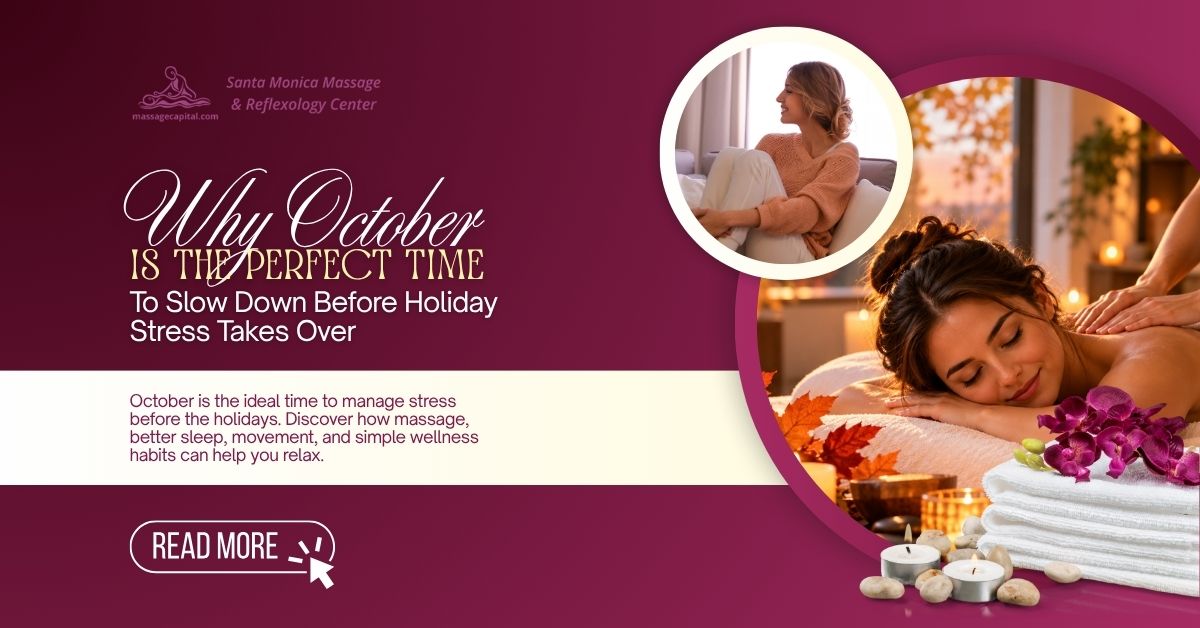
October often feels like the calm before the storm.
Summer vacations are behind us, work and school routines are in full swing, and the holiday season is approaching faster than many people realize. Soon, calendars will fill with family gatherings, shopping trips, travel plans, year-end deadlines, and social commitments.
While these activities can be exciting, they also create additional demands on our time and energy.
For many people, the effects of holiday stress begin appearing long before Thanksgiving or Christmas arrives.
Tight shoulders, restless nights, headaches, lower back discomfort, and constant fatigue can all become more noticeable when schedules grow increasingly demanding.
That’s why October is an ideal opportunity to slow down, establish healthier habits, and give your body the attention it deserves before the busiest months of the year.
Why Stress Often Begins Building Before the Holidays
Holiday stress rarely appears overnight.
It develops gradually as responsibilities accumulate.
During October, many people begin managing year-end work projects, family plans, travel arrangements, and additional financial commitments.
Even enjoyable activities can feel overwhelming when there isn’t enough time to rest.
Some common sources of pre-holiday stress include:
- Increasing workloads and deadlines
- Holiday shopping and budgeting
- Travel arrangements
- Family gatherings and social commitments
- School and household responsibilities
- Changes in sleep schedules
- Less time for exercise and relaxation
The challenge isn’t necessarily having a busy calendar. It’s maintaining that pace without giving yourself adequate opportunities to recover.
Recognizing this early can help you avoid entering the holiday season already feeling exhausted.
Your Body May Show Signs of Stress Before You Recognize Them
Stress isn’t always something you experience only mentally.
It can also influence how your body feels.
During stressful situations, people often unconsciously tighten their shoulders, clench their jaws, or maintain tension in their neck and upper back.
These physical responses may become more noticeable when stress continues over several days or weeks.
Common signs include:
- Tight neck and shoulders
- Tension headaches
- Lower back discomfort
- Jaw clenching
- Muscle fatigue
- Difficulty relaxing
- Restless sleep
- Feeling physically drained after work
Sometimes, people become so accustomed to these sensations that they stop noticing how much tension they’re carrying.
That’s why taking regular breaks matters.
As discussed in GNHealth’s article, Why Mental Health Breaks Are So Important, making time for mental wellbeing deserves a place in everyday routines.
A break doesn’t always need to involve a vacation. Sometimes, stepping away from work, taking a walk, or spending time doing something relaxing can make a meaningful difference.
Why October Stress Can Feel Worse After a Busy Summer
Many people enter October already carrying physical tension from previous months.
Summer often involves travel, outdoor activities, long walks, recreational sports, and irregular schedules.
September then introduces another transition as people return to desk work, commuting, and more structured routines.
In the article Why September Is the Month Your Body Starts Feeling Everything You Ignored All Summer, we explored how summer activities and changing routines can contribute to lingering muscle stiffness.
October presents another opportunity to reassess those habits.
Rather than carrying accumulated tension into November and December, consider whether your body needs more movement, relaxation, or recovery.
Long Workdays Can Make Physical Tension Worse
As the end of the year approaches, work schedules often become more demanding.
Unfortunately, many professionals spend most of those hours sitting.
Long periods at a desk can contribute to stiffness in the neck, shoulders, hips, and lower back, particularly when movement breaks are limited.
You may notice your shoulders gradually rounding forward while typing or your head moving closer to your computer screen.
By the end of the day, your muscles may feel tired even though you haven’t performed strenuous physical activity.
GNHealth’s article on How to Avoid Back Pain in the Long Term provides additional reading on maintaining back comfort.
Simple habits can help reduce everyday stiffness:
- Stand and walk regularly.
- Adjust your workstation for comfort.
- Change positions throughout the day.
- Stretch areas that feel tight.
- Maintain regular physical activity.
- Give your body opportunities to rest.
These small changes can become especially valuable during demanding work periods.
How Massage Can Support Stress Management
Massage is often associated with vacations, celebrations, or special occasions.
However, it can also be incorporated into an ongoing wellness routine.
Massage may help temporarily reduce muscle tension, encourage relaxation, and provide an opportunity to disconnect from everyday responsibilities.
Potential benefits include:
- Relief from feelings of muscle tightness
- Greater physical relaxation
- Reduced perceived stress
- Improved comfort during everyday movement
- Reduced stiffness
- Increased body awareness
- A dedicated opportunity to rest
For people experiencing work-related tension, Santa Monica Massage therapy can be one option for incorporating relaxation into a healthier routine.
Massage doesn’t eliminate stressful responsibilities, but it can provide time to focus on physical comfort and recovery.
The key is viewing massage as one part of a broader approach that also includes movement, adequate sleep, and healthy daily habits.
Which Type of Massage Is Best Before the Holiday Season?
Different massage techniques provide different experiences.
Choosing the right style depends on whether your primary concern is stress, stiffness, or localized muscle tension.
Relaxation Massage for Mental Fatigue
If your schedule has left you feeling mentally exhausted, relaxation-focused massage may be appealing.
Gentle, flowing techniques can encourage relaxation and help reduce the sensation of muscular tightness.
This style is often preferred by people who want a peaceful break from everyday responsibilities.
Thai Massage for Stiffness and Mobility
Long periods of sitting can leave the hips, shoulders, and back feeling restricted.
For individuals who prefer more stretching and movement during a session, Thai massage Santa Monica may be worth exploring.
Thai massage commonly incorporates assisted stretching, compression, and movement techniques.
It may appeal to people who feel stiff after spending much of the week working at a desk or commuting.
Therapeutic Massage for Targeted Tension
Sometimes discomfort is concentrated in specific areas, such as the neck, shoulders, or lower back.
Therapeutic massage can focus on those areas using techniques and pressure suited to the individual’s comfort and preferences.
Couples Massage for Shared Relaxation
October can also be an opportunity to reconnect with someone before holiday schedules become crowded.
A Couples massage Santa Monica experience offers partners an opportunity to enjoy relaxation together.
Instead of waiting for a holiday or anniversary, setting aside time for shared wellness can be a meaningful way to unwind.
Why Better Sleep Should Be Part of Your October Wellness Plan
One of the first habits affected by busy schedules is sleep.
People often stay awake later to finish work, organize holiday plans, or catch up on responsibilities.
Unfortunately, insufficient sleep can make everyday stress more difficult to manage.
Sleep supports physical recovery, concentration, emotional regulation, and general wellbeing.
If you’re already feeling overwhelmed in October, improving your sleep routine may be one of the most useful changes you can make.
Consider these habits:
- Maintain consistent bedtimes.
- Reduce screen use before sleeping.
- Keep your bedroom comfortable.
- Avoid scheduling demanding tasks late at night.
- Establish a calming evening routine.
- Allow adequate time for sleep.
For additional guidance, read GNHealth’s How to Get a Good Night’s Sleep.
Massage and other relaxation practices may also help some people unwind, particularly when muscular tension makes it difficult to settle down at night.
Stress-Related Headaches Are Another Reason to Pay Attention
Headaches can have many causes, but muscle tension and stress may contribute to certain types.
People experiencing tension-type headaches sometimes describe a feeling of pressure around the head or tightness in the neck and shoulders.
Long workdays, limited movement, and sustained concentration may add to that discomfort.
GNHealth’s article, How to Avoid Getting Headaches All the Time, offers additional reading about headaches and everyday habits.
If you frequently experience tight shoulders or neck stiffness during stressful periods, incorporating movement breaks and relaxation into your routine may help you feel more comfortable.
Five Simple Ways to Slow Down This October
You don’t need to completely change your lifestyle to make more room for recovery.
Small habits practiced consistently can help you manage everyday stress.
1. Schedule Time Away From Work
Even short periods without emails, meetings, or phone notifications can provide an opportunity to mentally disconnect.
Try reading, walking, listening to music, or spending time outdoors.
2. Move Throughout the Day
If you spend most of your workday sitting, make an effort to stand, walk, and change positions regularly.
Movement can help reduce the stiffness associated with prolonged sitting.
3. Protect Your Sleep Schedule
Avoid sacrificing sleep to complete every task on your calendar.
Consistent sleep habits support both physical and emotional wellbeing.
4. Make Relaxation a Priority
Consider setting aside time for stretching, meditation, yoga, massage, or another activity that helps you unwind.
Relaxation doesn’t need to be something you do only after every responsibility has been completed.
5. Be Selective About Holiday Commitments
October is a good time to review your upcoming calendar.
Consider which activities genuinely matter and which commitments may create unnecessary pressure.
Leaving space for rest can help make the holiday season more enjoyable.
These habits complement the broader wellness ideas discussed in GNHealth’s 11 Easy Lifestyle Changes to Stay Healthy.
Why You Shouldn’t Wait Until You’re Completely Overwhelmed
Many people approach self-care reactively.
They wait until they’re exhausted, their muscles feel extremely tight, or their sleep has become disrupted before taking action.
But relaxation and recovery don’t have to begin only when discomfort becomes severe.
Establishing healthier habits in October can make them easier to maintain throughout November and December.
That might mean taking regular walks, prioritizing sleep, scheduling relaxation time, or occasionally booking a Santa Monica Massage session to address everyday muscle tension.
The important part is finding a routine that fits your lifestyle.
You don’t need an elaborate wellness plan.
You need habits you can realistically maintain.
A More Relaxed Holiday Season Starts Before November
It’s easy to assume you’ll finally relax when the holidays arrive.
But the holiday season often brings more responsibilities rather than fewer.
That’s why October deserves more attention.
This month provides an opportunity to recognize accumulated stress, reassess your daily habits, and make small adjustments before your schedule becomes even more demanding.
Instead of waiting for the perfect time to slow down, create that opportunity now.
Final Thoughts
October may not seem like the busiest month of the year, but it’s often when the pressure of the coming holiday season begins to build.
Work deadlines, family plans, travel arrangements, and everyday responsibilities can gradually increase stress while leaving less time for recovery.
Your body may respond with tight shoulders, neck stiffness, fatigue, restless sleep, or difficulty relaxing.
Rather than ignoring those signals, use October as an opportunity to establish healthier habits.
Move regularly.
Prioritize sleep.
Take mental health breaks.
Make time for relaxation.
And remember that recovery is not something that should be postponed until your schedule becomes less demanding.
The best time to prepare for a busy season is before it begins.
Frequently Asked Questions
Why does stress often increase before the holidays?
Work deadlines, travel planning, financial responsibilities, family gatherings, and social commitments can increase pressure during the months leading up to the holidays.
Can massage help reduce stress-related muscle tension?
Massage may help temporarily relieve muscle tightness and encourage relaxation, particularly for people experiencing neck, shoulder, or back tension during stressful periods.
Is October a good time to start a wellness routine?
Yes. October provides an opportunity to establish healthier habits before November and December become busier.
Is Thai massage or relaxation massage better for stress?
Relaxation massage generally emphasizes calming techniques, while Thai massage incorporates more assisted stretching and movement. The best choice depends on individual preferences and physical needs.
Can massage help improve sleep?
Massage may promote relaxation and reduce physical tension, which can help some people unwind. Sleep quality also depends on factors such as daily routines, stress levels, and sleep habits.
How often should you get a massage during stressful months?
There is no universal schedule. Some people prefer monthly sessions, while others schedule massages according to their activity levels, stress, and personal preferences.
Can prolonged sitting contribute to muscle tension?
Yes. Remaining in one position for extended periods can contribute to stiffness, particularly around the neck, shoulders, hips, and lower back.
What are some simple ways to reduce holiday stress?
Maintaining consistent sleep, taking movement breaks, exercising regularly, limiting unnecessary commitments, and making time for relaxation can all support a healthier routine.